Product image slideshow Items
The Last Charge of the Rough Rider
$24.95
Excl. tax
In stock
Your cart is currently empty
Product image slideshow Items
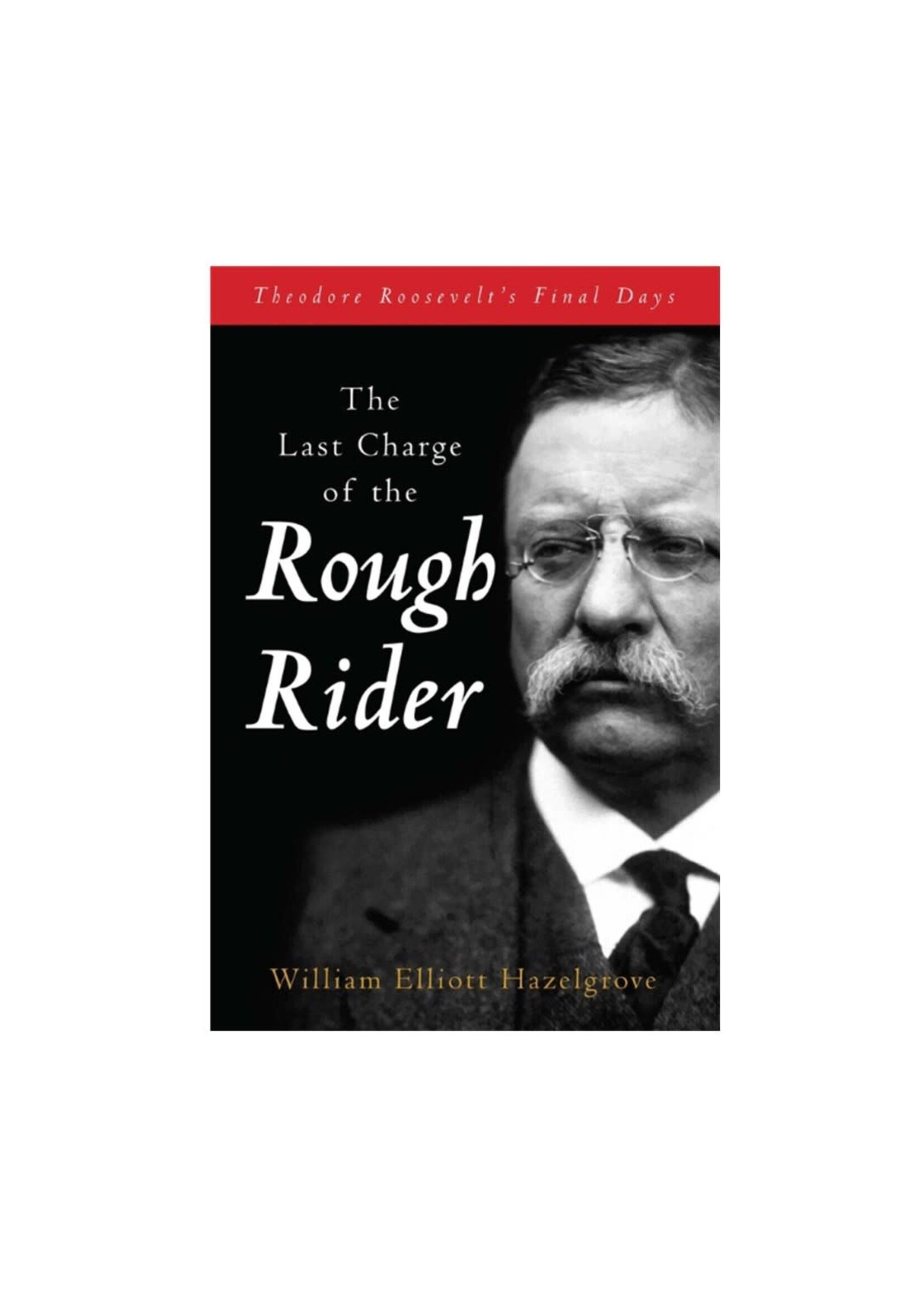
Many books have explored the life of Theodore Roosevelt—but few focus on the dramatic and often overlooked final chapter of his life. In this gripping account, William Hazelgrove brings those last years into sharp focus, revealing a story of resilience, loss, and relentless drive.
Beset by failing health—rheumatism, a dangerous embolism, lingering infection, a crippled leg, and even a bullet lodged in his chest from an earlier assassination attempt—Roosevelt nevertheless refused to slow down. Between April 1917 and January 6, 1919, he faced profound personal and political trials: the bitter disappointment of being denied command of a volunteer regiment in World War I, his audacious desire to lead a Rough Riders–style mission into battle, and the devastating loss of his son Quentin, killed in action over France.
Even in decline, Roosevelt’s political influence remained formidable. His outspoken opposition to President Woodrow Wilson helped propel Republicans to reclaim Congress in 1918, underscoring his enduring impact on American politics.
Yet, as Hazelgrove suggests, it was Roosevelt’s lifelong pursuit of the “vigorous life”—his refusal to yield, even in the face of mounting physical limits—that may have hastened his untimely death at just sixty years old.
“The Old Lion is dead,” his son Archie wrote on January 6, 1919. With those words, a towering figure in American history—and a defining era—came to an end.